

|
©Arlene R. Taylor, PhD
I opened the letter to find three hand-written pages of words so tiny I had to get out my magnifying glass. In part, the writer said, “After being out of work for some time, I enrolled in career-training classes. Our next assignment is to visualize a new product label and transfer it to paper. I’m afraid this retraining won’t work for me. I’m way too old to figure out this ‘new age’ gobbledygook psychobabble.”
I must confess that, by the time I had deciphered my way to the end of page three, I was laughing aloud. How unfortunate that people so often speak from misinformation rather than fact.
So I began to craft my response:
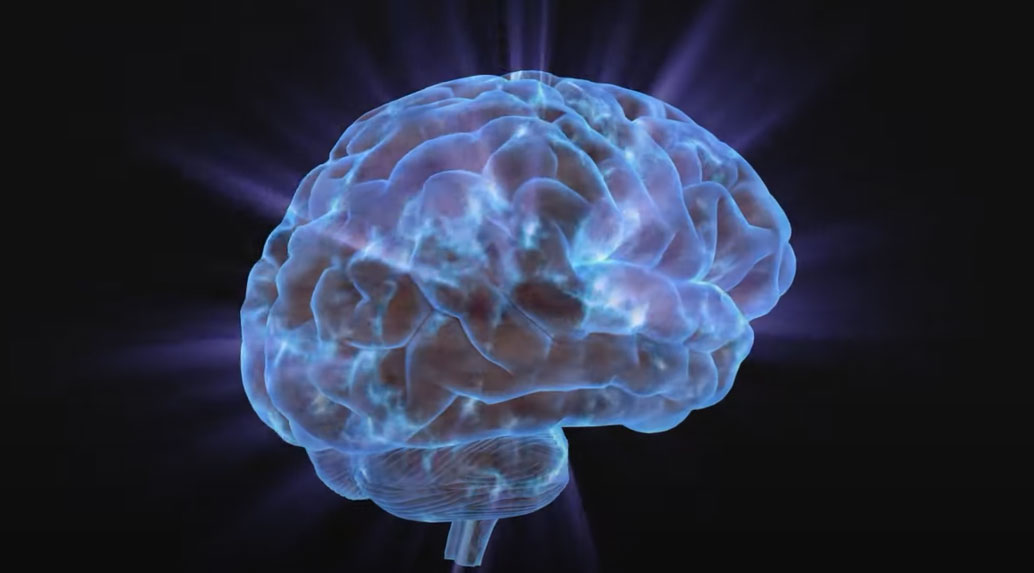
First of all, visualization is “old age.” This natural brain phenomenon has likely been around since humans took up residence on this planet. The only “new age” aspect of visualization is the fact that brain-imaging studies have now associated the ability to visualize—a form of creativity—with the right frontal lobe. All normally-functioning brains are believed to possess the ability to visualize: to create internal mental pictures.
In terms of brain function, the verb to image simply means to call up a mental picture. Therefore, mental imaging (visualizing) describes the process of creating a picture in your mind’s eye of something that is not currently and concretely present in your field of vision. It may be a representation of something you have actually seen—e.g., an elephant, or something that you have never seen—e.g., an elephant with flashing psychedelic purple spots.
Many people take the ability to visualize for granted and aren’t even consciously aware that it’s happening. For example:
- The telephone rings. One of your best friends is calling. A mental image of the person may spring to life on the movie screen of your mind.
- You are on a school field trip. One of the teenagers says, “I want an ice cream cone.” You can be sure that he/she sees an internal mental picture of an ice cream cone. If you ask, “Would you like plain or sugar cone?" the teenager will likely visualize what each cone looks like before stating a choice.
- While setting the table for company, you picture the face of each person and decide where each will sit.
- You take a vacation to a destination that you have spent time thinking about. (People usually end up in places they have spent time thinking about.)
Many people have honed this mental skill to improve their personal health and wellbeing. Some are even teaching others how to use it. To some degree, the body does act out what the mind sees internally:
- Cancer patients are learning to visualize their white blood cells as fighters that attack and destroy tumors. They are picturing wellness.
- Children with severe asthma are being taught to visualize their bronchial tubes expanding and allowing air to flow freely into their lungs. In many cases, this effectively aborts their asthmatic breathing attacks.
- Musicians, athletes, and sports figures have learned to rehearse mentally when actual rehearsal is impossible. They picture what they want to have happen.
- Meditators ponder a mental picture, focusing their thoughts in contemplation. This gives brain and body a map to follow. Eventually they become the mental picture they have been beholding.
Myths about visualizing sometimes keep people from effectively using their active-mental-picturing ability. Here are examples:
- Mental imaging means coming up with something completely new, and that's dangerous. Actually, there may be nothing new under the sun. Most ideas simply come from rearranging what you already know. Or they involve an extension of something that already exists.
- Mental imaging is auto-hypnosis. Hypnosis is usually defined as a state very similar to sleep, but a sleep state that is induced by a hypnotizer whose suggestions are accepted by the subject. Mental imaging is not auto-hypnosis; it is best accomplished while the brain is awake and alert.
- Mental imaging is synonymous with uniqueness so can be done only by experts. The word unique means one of a kind, very rare, or very unusual. Every normal human brain contains visualizing abilities, plus a left-brain hemisphere so that the mental images may be rationally and logically analyzed and critiqued.
- ou can't teach an old dog new tricks. Wrong. It may take slightly longer for the old dog to master the trick, but learn it can. Be careful not to confuse aging with stagnation. Professor Harvey Lehman did a study of 1000 creative achievements. He found that the median age of the creators was 74 at the time of their achievement. Alexander Graham Bell perfected the telephone when he was 58; he figured out how to stabilize the balance of the airplane when he was in his seventies. Grandma Moses began to paint in her late seventies. And so on.
Prior to the advent of television, especially in radio’s heyday, people saw pictures in their mind’s eye when they read or listened to stories. Interestingly enough, studies have shown that viewing large amounts of television may decrease skills of active mental picturing. Watching television largely involves passive mental picturing as the brain processes what other brains have created. For this reason, many creative individuals limit their television-viewing.
The brain resembles a muscle in that exercise stimulates its growth. You can learn to hone the skill of visualizing and stimulate your own brain function in the process. Every thought you think creates movies in your mind. In effect, you are your own director, photographer, editor, and viewer. How are you using this natural brain phenomenon? Do you allow it to run away with itself and picture fear or failure? Do you take charge and create mental pictures of success—by design? It’s your choice.
|